
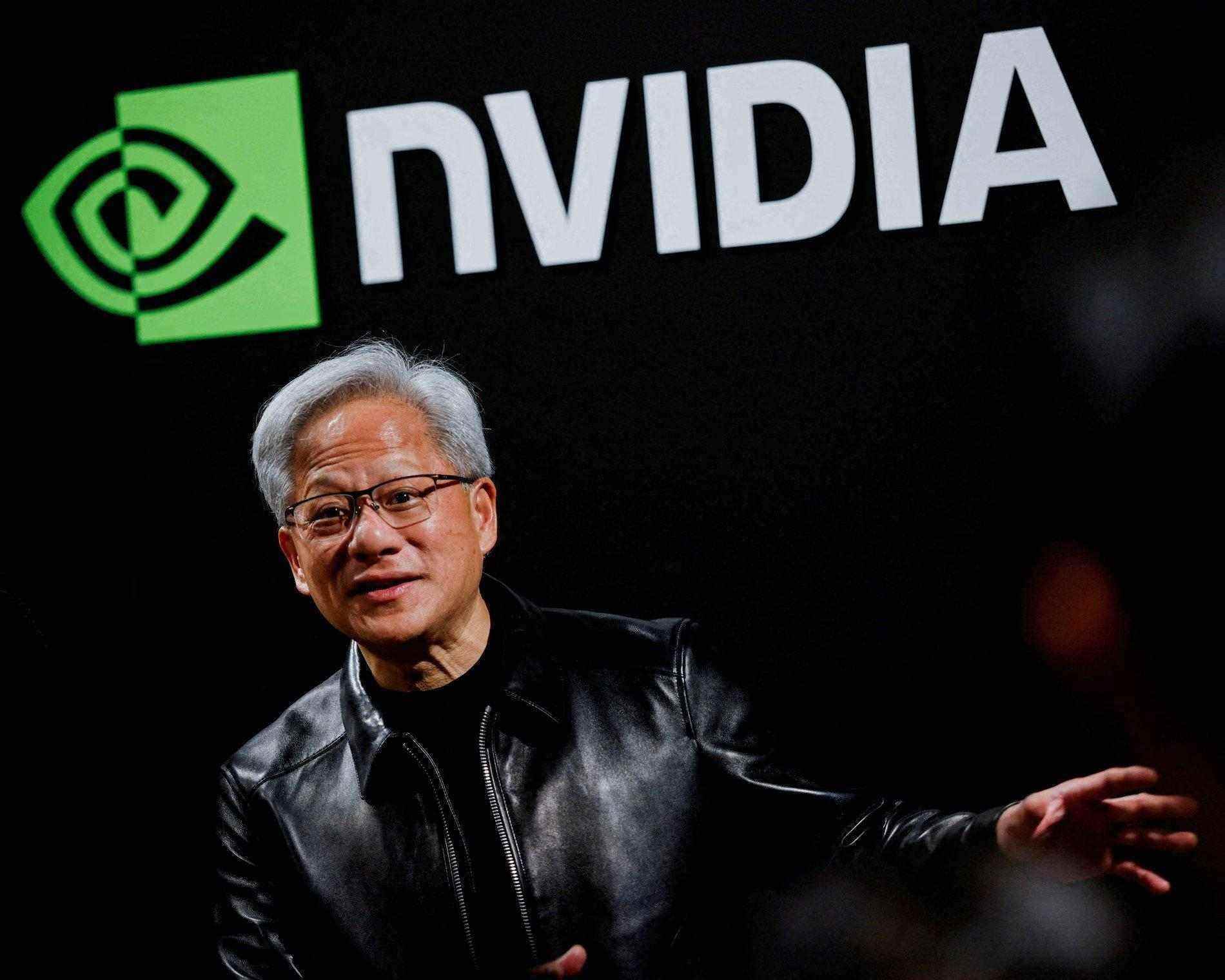
Jensen Huang’s Nvidia Exit Sends Shockwaves Across Asia’s $3 Billion AI Chip Industry
The AI industry has spent years treating Nvidia as one of the most reliable foundations of the global technology economy. Its chips power data centers, its software supports AI developers, and its partnerships connect semiconductor manufacturers, cloud companies and governments across continents.
Jensen Huang’s Nvidia Exit Sends Shockwaves Across Asia’s $3 Billion AI Chip Industry
Then Jensen Huang left.
His resignation has created a leadership crisis at one of the world's most strategically important technology companies. But the consequences extend far beyond Nvidia's headquarters. Across Asia, governments are now evaluating whether their AI ambitions remain secure when a company at the center of their infrastructure plans suddenly loses its most influential leader.
The immediate reactions reveal something important. Countries are not simply worried about a CEO. They are worried about the infrastructure, investments and strategic relationships built around his company.
Nvidia's Leadership Crisis Becomes an Asian Economic Concern
On November 11, Nvidia's board accepted Jensen Huang's resignation as president, CEO and board member, effective immediately.
The departure followed reports concerning his personal relationship with Alice Huang, a former executive at Singapore-based cloud computing company Megaspeed, and allegations that she may have been connected to Chinese intelligence.
Nvidia's independent directors had already launched an investigation into whether Huang had been targeted by a foreign intelligence operation.
The allegations remain disputed. China has rejected the espionage claims, and Reuters has not independently established that Alice Huang worked for the Chinese government.
Nevertheless, the controversy has become a corporate governance issue with international consequences.
Nvidia is not an ordinary chip manufacturer. It occupies a central position in the infrastructure supporting the global AI economy.
Asia's Governments Are Protecting Their Nvidia Commitments
The most immediate response has come from South Korea, where the government moved quickly to confirm that its existing cooperation with Nvidia would continue.
Taiwan emphasized that its planned Nvidia overseas headquarters remained on schedule.
Japan said it would closely monitor developments while prioritizing semiconductor supply stability.
China rejected the espionage allegations and criticized export controls that disrupt international supply chains.
Singapore, meanwhile, clarified the status of its separate investigation involving Megaspeed.
These reactions demonstrate how deeply Nvidia has become connected to national economic strategies.
For governments investing billions in AI infrastructure, leadership uncertainty at Nvidia is no longer just a corporate story.
South Korea's 260,000 GPU Commitment Shows the Scale of Dependence
South Korea provides the clearest example of Nvidia's strategic importance.
Following Huang's resignation, the country's Science Ministry confirmed that Nvidia had reaffirmed its commitment to supply 260,000 advanced graphics processing units.
The partnership involves major Korean companies, including Samsung Electronics, SK Hynix, Hyundai Motor Group and Naver Cloud.
The GPUs are intended to support large-scale AI computing facilities and industrial development.
This relationship is particularly important because South Korea contributes essential memory technologies used in advanced AI systems.
Samsung and SK Hynix are not simply customers. They are important suppliers within the broader AI semiconductor ecosystem.
The partnership therefore creates mutual dependence.
South Korea needs Nvidia's computing platform. Nvidia benefits from Korean semiconductor manufacturing capabilities.
That relationship is unlikely to disappear because of one executive's departure. However, its future execution will depend on corporate stability, production capacity and continued cooperation.
China's $3.2 Billion AI Pipeline Faces Greater Uncertainty
China presents a more complicated situation.
A Reuters review of procurement notices, investment plans and corporate disclosures identified more than $3 billion in Chinese AI computing projects connected to restricted Nvidia processors.
The estimated value exceeds $3.2 billion, or approximately 23 billion yuan.
These projects involve H100, H200 and H800 processors, many of which face US export restrictions.
The important distinction is that the $3.2 billion represents the broader value of AI computing projects, not simply Nvidia chip purchases.
Some projects are already operating or under construction. Others face uncertainty over whether the required processors can be obtained.
This creates two problems.
First, companies may need to delay infrastructure deployment.
Second, organizations could be forced to redesign systems around alternative processors, potentially increasing costs and reducing performance.
For China, the Nvidia situation reinforces an existing strategic priority — developing domestic semiconductor and AI infrastructure that depends less on American technology.
Singapore's Megaspeed Investigation Reveals Supply Chain Weaknesses
Singapore's role deserves particular attention because the Megaspeed investigation highlights the complexity of international technology distribution.
Authorities began investigating several companies and their officers in February 2025 over suspected false declarations involving server purchases and exports.
Alice Huang's passport was seized in June 2025 to ensure her availability for questioning.
In February 2026, Singapore authorities concluded that there was insufficient evidence to establish that she had committed the suspected offences involving inaccurate declarations.
However, police assessed that she had knowingly provided inaccurate information about her role at Megaspeed. She received a warning and was barred from returning to Singapore.
Her passport was returned.
The investigation involving Megaspeed and six other individuals remains ongoing.
An important legal distinction must be maintained. Singapore explicitly stated that Alice Huang was not investigated for espionage.
The broader lesson concerns supply chain transparency. Servers can move between countries, change destinations and pass through multiple commercial intermediaries.
Without reliable documentation, regulators may struggle to establish where sensitive computing equipment ultimately ends up.
Taiwan Keeps Its Nvidia Headquarters Ambitions Alive
Taiwan's response has been relatively measured.
Economy Minister Kung Ming-shin said Huang's departure was unlikely to significantly change the global AI industry's growth.
Taipei's city government also confirmed that Nvidia's planned overseas headquarters remained on track.
The company had fulfilled its contractual obligations, and local officials intended to continue supporting the project.
Taiwan has strong reasons to preserve this relationship.
Its semiconductor ecosystem is strategically important to the global technology industry. Attracting Nvidia's long-term presence strengthens its position within the international AI economy.
The leadership transition changes the corporate environment, but it does not automatically invalidate existing agreements.
Japan Prioritizes Semiconductor Supply Security
Japan has taken a cautious position.
Its Industry Ministry described Nvidia as an important participant in the country's AI semiconductor industry and said the government would closely monitor developments.
Deputy Chief Cabinet Secretary Masanao Ozaki also emphasized that it was too early to determine the broader impact.
Japan's priority is maintaining a stable semiconductor supply.
This is a practical response. AI infrastructure requires years of investment, and interruptions in access to advanced processors could affect industrial competitiveness.
Nvidia's Real Product Is an Entire AI Infrastructure Platform
Nvidia's competitive position is built on more than individual processors.
Its business connects GPUs, software, networking technologies and the systems required to train and operate AI models.
Customers do not simply purchase a chip. They invest in an ecosystem.
That creates switching costs because replacing Nvidia may require changes to software, infrastructure, developer workflows and technical expertise.
For Asian governments, this makes continuity particularly important.
A new CEO can change management priorities, but rebuilding Nvidia's technological ecosystem would be far more difficult.
The Competitive Battle Extends Beyond Nvidia
Nvidia's leadership transition creates opportunities for competitors, although replacing its position will not be straightforward.
AMD and other semiconductor companies may benefit if customers become more interested in alternative suppliers.
Chinese semiconductor manufacturers also have an incentive to accelerate domestic development.
Meanwhile, Samsung and SK Hynix remain important participants in the memory supply chain.
However, competition is not determined by chip performance alone.
Software compatibility, production capacity, energy efficiency, availability and long-term customer support all matter.
Nvidia's greatest advantage is the combination of these capabilities.
The Weakest Point Is Corporate Governance, Not Chip Performance
From a legal and competition-policy perspective, the most important issue is the distinction between personal allegations, corporate responsibility and proven wrongdoing.
An investigation is not a conviction. An intelligence suspicion is not proof of espionage.
Nvidia's board must establish whether appropriate controls existed, whether conflicts of interest were disclosed and whether sensitive company information was adequately protected.
The board also faces a broader governance challenge.
When a company becomes strategically important to governments and entire industries, excessive dependence on one individual becomes a business risk.
Investors should examine succession planning, independent oversight, disclosure practices and the strength of management beyond the former CEO.
The weakest aspect of the broader public discussion is its tendency to combine espionage allegations, Singapore's trade investigation and Chinese chip procurement into one narrative without establishing that they are directly connected.
These issues deserve separate investigations and evidence-based conclusions.
AI Businesses Must Turn Infrastructure Uncertainty Into Commercial Opportunities
For companies building AI products, Nvidia's situation offers a practical lesson.
Do not build an entire business around the assumption that one supplier, one platform or one executive will remain unchanged.
Businesses should consider alternative computing providers, optimize workloads to reduce unnecessary GPU consumption and negotiate clearer service commitments.
There is also an opportunity to develop products that deliver measurable business outcomes rather than simply selling access to AI technology.
Customers pay for reduced operating costs, faster customer service, better forecasting and increased productivity.
They do not necessarily care which processor powers the application.
That distinction matters because infrastructure suppliers compete on technology, while smaller businesses can compete on customer understanding and execution.
Small Businesses Can Build AI Revenue Without Owning Expensive GPUs
Small and medium-sized businesses should avoid trying to compete directly with major technology companies in semiconductor infrastructure.
Instead, they can build businesses around practical applications.
Examples include AI customer support, automated document processing, industry-specific software, marketing operations and workflow automation.
The strongest opportunities often come from solving narrow problems for specific industries.
A small company serving logistics businesses, accounting firms or retailers does not need to manufacture chips.
It needs reliable infrastructure, good software and customers willing to pay for results.
Diversifying suppliers and keeping operating costs flexible can also protect margins when computing prices or availability change.
Nvidia's Future Depends on Institutional Strength Beyond One Leader
Jensen Huang's departure marks a significant moment for Nvidia and the wider AI industry.
South Korea is protecting its 260,000-GPU commitment. Taiwan is maintaining its headquarters project. Japan is monitoring semiconductor security. Singapore continues its investigation into Megaspeed, while China faces uncertainty around billions of dollars in AI computing projects.
The immediate message is clear.
Nvidia's importance to Asia is much larger than its leadership structure.
But the transition also exposes a fundamental weakness in the AI economy — too much strategic dependence can accumulate around a small number of companies and individuals.
Nvidia's next chapter will be judged not simply by its ability to produce faster chips, but by whether it can preserve customer confidence, institutional credibility and international partnerships.
The AI economy does not stop when a CEO leaves.
However, this crisis is a reminder that the companies controlling its infrastructure must be stronger than the individuals leading them.
Jensen Huang’s Nvidia Exit Sends Shockwaves Across Asia’s $3 Billion AI Chip Industry
Nvidia Jensen Huang, Nvidia CEO resignation, Nvidia Asia strategy, AI semiconductor industry, Nvidia GPU supply, South Korea AI infrastructure, China AI chips, Nvidia export controls, Megaspeed investigation, global AI supply chain, Taiwan semiconductor industry, Japan chip security, AI business strategy, AI infrastructure investment
