
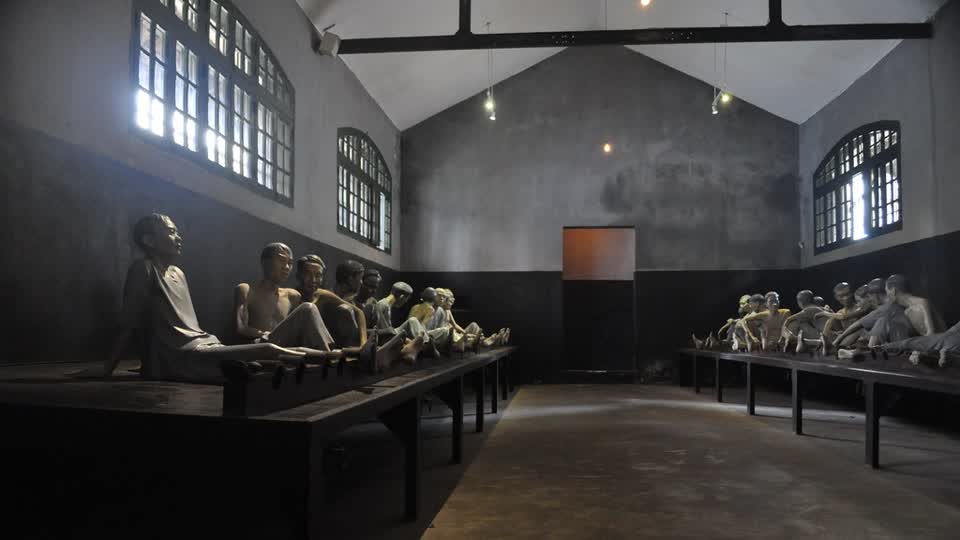
Vietnam’s Most Emotional Travel Experiences Are Hidden Behind Prison Walls
Vietnam’s Prison Museums . Where History Stops Feeling Abstract
Most travelers arrive in Vietnam expecting movement.
Scooters flooding intersections in Hanoi. Fishing boats rocking near Phu Quoc. Cafes spilling onto sidewalks in Hue. The country often feels kinetic, noisy, restless. Even its landscapes seem to move — rice terraces folding into mountains, tropical storms sweeping across coastlines, riverboats drifting through the Mekong Delta.
Then you walk into one of Vietnam’s former prisons.
Everything changes.
The noise disappears first. Conversations become shorter. Footsteps slow down. Travelers who spent the morning taking cheerful street-food photos suddenly find themselves staring at rusted shackles, cramped concrete cells, and handwritten testimonies from prisoners who once survived years underground.
Vietnam’s prison museums are not conventional tourist attractions. They are historical confrontations. Some are preserved almost exactly as they were during French colonial rule or wartime detention periods. Others combine reconstruction, memorialization, and political storytelling. Together, they form one of the most emotionally complex travel routes in Southeast Asia.
And surprisingly, these sites continue attracting both domestic and international visitors in growing numbers.
Not because they are comfortable.
Because they feel disturbingly real.
1. Son La Prison . Isolation In Vietnam’s Northern Mountains
Son La Prison was constructed by the French in 1908 on Khau Ca Hill in Son La City. At first glance, the surrounding landscape feels almost peaceful. Green hills rise behind the old prison walls. Mountain air moves quietly through the compound.
That contrast matters.
French colonial authorities intentionally built prisons like Son La in remote regions to isolate political prisoners physically and psychologically. Revolutionary figures later connected to Vietnam’s independence movement — including Le Duan, Truong Chinh, Van Tien Dung, and To Hieu — were imprisoned here.
Today, one of the most visited spots is the famous To Hieu peach tree. According to historical accounts, the tree survived despite the prison’s harsh conditions and became a symbol of endurance among inmates.
A Vietnamese historian once described Son La this way:
“The prison was designed to erase political resistance through distance. Instead, it strengthened solidarity.”
Visitors often underestimate how emotionally heavy mountain prisons can feel. The isolation remains tangible even now.
2. Hoa Lo Prison . Hanoi’s Most Misunderstood Museum
Located in central Hanoi, Hoa Lo Prison — often nicknamed the “Hanoi Hilton” internationally — may be Vietnam’s most internationally recognized prison site.
Originally constructed by French colonial authorities in 1896, Hoa Lo detained generations of Vietnamese political activists, intellectuals, and anti-colonial figures including Phan Boi Chau and Nguyen Van Cu.
The preserved guillotine remains one of the museum’s most unsettling artifacts.
Unlike some museums that soften historical violence through abstraction, Hoa Lo presents torture devices, confinement systems, and prison regulations with direct visual clarity. The narrow cells, iron shackles, and execution areas feel claustrophobic even during crowded tourist hours.
At the same time, modern visitors sometimes debate the museum’s narrative framing. International tourists familiar with American POW history may notice differing historical emphases compared with Western interpretations.
That tension itself becomes part of the visit.
A French travel writer noted after visiting:
“Hoa Lo is not trying to be neutral. It is trying to remember.”
That distinction is important for travelers approaching historical museums abroad.
3. Vinh Prison . The Forgotten Revolutionary Crossroads
Compared with Hoa Lo or Con Dao, Vinh Prison receives fewer international visitors. Yet historically, it played a major role during anti-colonial resistance movements in central Vietnam.
Built in 1804 inside the ancient Nghe An Citadel area, the prison later became a detention center for activists connected to movements such as Can Vuong, Duy Tan, Dong Du, and anti-tax uprisings during French rule.
The preserved torture instruments remain deeply disturbing.
Unlike heavily commercialized tourist sites, Vinh Prison often feels quieter and less staged. Travelers interested in Vietnamese political history frequently find it more reflective because crowds are smaller and the atmosphere less curated.
The museum experience here depends heavily on local guides. A knowledgeable guide transforms the site from static relics into human stories.
Without context, many visitors miss the prison’s broader significance within Vietnam’s early nationalist movements.
4. Thua Phu Prison . Hue’s Layered Political Memory
Located at 1 Le Lai Street in Hue, Thua Phu Prison originally served as housing for Nguyen Dynasty naval forces before French authorities converted it into a prison in 1899.
The site carries strong symbolic importance partly because General Vo Nguyen Giap was once imprisoned here alongside Nguyen Thi Quang Thai and several intellectuals during political crackdowns connected to the Nghe Tinh Soviet movement.
Hue itself already possesses a melancholic historical atmosphere. Imperial ruins, war memories, Buddhist temples, and colonial architecture overlap constantly throughout the city. Thua Phu Prison fits naturally into that emotional geography.
One local academic explained:
“Hue remembers history differently from Hanoi or Saigon. Here, memory feels slower.”
That feeling becomes obvious while walking through the prison grounds.
5. Lao Bao Prison . A Harsh Edge Near The Laos Border
Lao Bao Prison, built by the French in 1908 near the Laos border in Quang Tri Province, was once among the largest prisons in Indochina.
The geography itself amplified punishment.
Extreme heat, isolation, disease, and difficult terrain made survival physically exhausting long before interrogation or forced labor began. Revolutionary prisoners including To Huu and Nguyen Chi Thanh were detained here.
Today, the prison sits near Highway 9 in Lao Bao Town, Huong Hoa District. Travelers passing through central Vietnam often combine visits with broader Quang Tri war-history itineraries.
The surrounding region still carries visible scars from twentieth-century conflict. Bomb craters, military cemeteries, and former DMZ locations remain part of the landscape.
Unlike polished urban museums, Lao Bao feels rawer and more exposed.
Things The Media Doesn’t Tell You
Most articles about Vietnam’s prison museums focus heavily on historical heroism or shocking torture methods. Far fewer discuss the practical emotional reality of visiting these sites.
Here is what planners and experienced travelers usually notice:
Prison tourism can become emotionally exhausting
Many travelers schedule multiple prison museums back-to-back across Vietnam. That often becomes psychologically draining. Sites like Con Dao, Hoa Lo, and Phu Quoc contain graphic historical content that accumulates emotionally over time.
Spacing these visits across a longer itinerary creates a healthier experience.
Guided tours dramatically improve understanding
Without historical context, some museums feel visually repetitive — cells, chains, walls, photographs. Strong local guides explain regional political movements, colonial systems, and prison hierarchies that international visitors may otherwise miss entirely.
Some reconstructions are debated
Recent vlogs, travel forums, and museum discussions occasionally question the accuracy of certain reconstructed scenes or mannequins used in prison exhibits. This does not automatically invalidate the sites, but travelers should understand that historical museums often combine preservation with interpretation.
Heat changes the experience
Many prison compounds were intentionally designed with poor ventilation. During Vietnam’s hot season, visitors physically feel the oppressive heat inside cells and corridors. That sensory discomfort unexpectedly deepens understanding of historical conditions.
Domestic visitors often react differently than foreign tourists
Vietnamese families frequently approach these sites with strong national memory and personal family connections. International travelers sometimes focus more on architecture or wartime history. Watching these different emotional responses side-by-side becomes part of the experience itself.
6. Buon Ma Thuot Exile House . Political Imprisonment In The Highlands
Built between 1930 and 1931, Buon Ma Thuot Exile House functioned as a detention center for political prisoners from central Vietnam.
Located at 18 Tan Thuat Street in Buon Ma Thuot City, the prison held several influential revolutionary figures including Vo Chi Cong and Phan Dang Luu.
The Central Highlands setting creates a unique atmosphere compared with coastal prisons. The surrounding volcanic soil, dry climate, and quieter streets produce a more isolated feeling.
Current exhibitions include preserved cells, historical photographs, and reconstructed detention areas intended to recreate daily prison life.
Travelers exploring coffee culture and ethnic minority communities around Dak Lak Province often discover the prison unexpectedly. The contrast between vibrant modern Buon Ma Thuot and the prison’s harsh history becomes striking.
7. Con Dao Prison . Vietnam’s Most Disturbing Historical Site
Con Dao Prison may be the single most emotionally intense historical attraction in Vietnam.
Originally established by the French in 1862, the prison complex later expanded under successive administrations. The infamous “tiger cages” remain central to the site’s reputation. Prisoners were confined in narrow concrete compartments exposed to extreme conditions and physical abuse.
Even experienced travelers often leave visibly shaken.
Yet Con Dao itself is paradoxical. Outside the prison complex, the island possesses beautiful coastlines, quiet roads, sea turtles, coral reefs, and forested hills. Luxury resorts now coexist alongside one of Southeast Asia’s darkest historical memorials.
That contradiction unsettles many visitors.
A travel documentary producer once remarked:
“Con Dao forces tourists to hold two truths simultaneously — beauty and brutality.”
Few destinations manage that so powerfully.
8. Phu Quoc Prison . History Beside A Resort Island
Phu Quoc Prison sits in An Thoi area on the southern end of Phu Quoc Island in Kien Giang Province.
Today, many tourists associate Phu Quoc primarily with beaches, resorts, seafood markets, and cable cars. The prison museum interrupts that narrative sharply.
Originally functioning as a prisoner-of-war camp before Vietnam’s reunification, the prison now preserves outdoor reconstruction areas, original artifacts, and exhibition halls documenting detention methods.
Some visitors find the mannequin displays particularly graphic.
The surrounding tourism boom creates an unusual contrast. Travelers may spend the morning at beach cafes and the afternoon inside recreated interrogation rooms.
That emotional shift captures something essential about modern Vietnam itself: rapid development layered over unresolved historical memory.
Full Summary
Vietnam’s prison museums represent some of the country’s most emotionally powerful travel experiences. Sites including Son La Prison, Hoa Lo Prison, Vinh Prison, Thua Phu Prison, Lao Bao Prison, Buon Ma Thuot Exile House, Con Dao Prison, and Phu Quoc Prison collectively document colonial repression, wartime imprisonment, revolutionary movements, and the resilience of political detainees across different eras of Vietnamese history.
Each location offers a distinct atmosphere shaped by geography, architecture, and historical context. Mountain isolation defines Son La. Urban political symbolism shapes Hoa Lo. Hue’s reflective mood surrounds Thua Phu. Con Dao combines tropical beauty with historical trauma. Meanwhile, less internationally known prisons such as Vinh and Lao Bao often provide quieter, more contemplative experiences for travelers seeking deeper historical understanding.
Modern visitors increasingly approach these destinations not simply as tourist attractions but as spaces of historical confrontation. Crowd levels, reconstructed exhibits, emotional fatigue, climate conditions, and differing cultural interpretations all influence the experience significantly. Travelers who combine museum visits with local guides, historical reading, recent vlogs, community discussions, and regional context typically gain a more balanced understanding of Vietnam’s prison heritage.
These sites ultimately reveal that Vietnam’s tourism landscape extends far beyond beaches and food culture. Its prison museums preserve difficult memories while forcing visitors to confront questions about colonialism, nationalism, suffering, resilience, and how nations choose to remember the past.
What Travelers Learn After Visiting Vietnam’s Historic Jail Complexes.
Vietnam prison museums, Hoa Lo Prison, Con Dao Prison, Phu Quoc Prison, Son La Prison, Vietnam war history, colonial prisons Vietnam, historical museums Vietnam, dark tourism Vietnam, Vietnam heritage sites, Hue historical sites, Quang Tri history, Hanoi prison museum, revolutionary history Vietnam, Vietnam travel history
