
Seoul Feels Different When You Stop Rushing
Most travelers arrive in Seoul expecting speed. Fast trains. Fast fashion. Fast coffee orders. Fast crowds crossing giant intersections beneath glowing advertisements. Yet the city reveals something entirely different when explored slowly with someone beside you.
The romantic side of Seoul is not built around luxury. It lives in movement. Two people sharing roasted sweet potatoes beside a river in winter. A quiet walk beneath cherry blossoms near Namsan. Couples sitting silently by the Han River without speaking for twenty minutes because the city itself fills the silence.
That is why Seoul works so well for couples. It does not force romance. It creates space for it.
And unlike the polished fantasy often shown in television dramas, the city is layered. Old palaces sit behind luxury boutiques. Tiny cafes survive between concrete towers. Students carrying backpacks pass newlyweds taking wedding photos beside centuries-old gates. Seoul constantly shifts between modern ambition and emotional nostalgia.
This journey through five romantic places in Seoul is less about checking landmarks and more about understanding how the city breathes after sunset, during spring rain, or on a quiet weekday afternoon.
Cheonggyecheon Stream . Seoul’s Urban Heartbeat
Cheonggyecheon Stream
There are cities that hide their rivers behind highways. Seoul chose to uncover one.
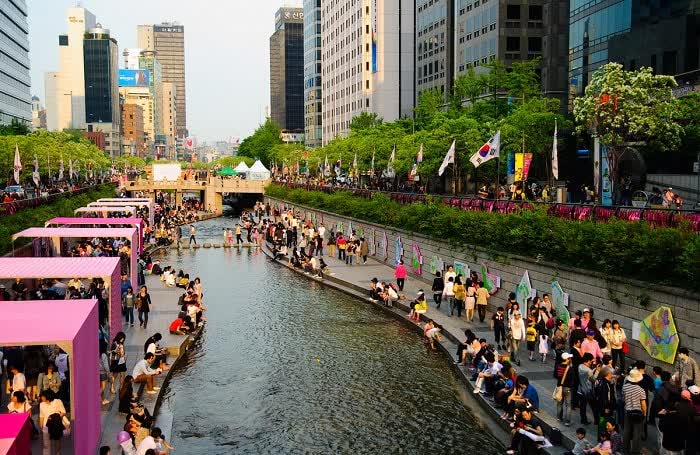
Cheonggyecheon Stream stretches nearly 6 kilometers through central Seoul, flowing past Jongno-gu and the Sejong-ro area. Decades ago, the stream disappeared beneath concrete during rapid urban development. Today it has become one of the city’s most human spaces.
Couples walk here because it feels strangely calm despite being surrounded by office towers.
During spring and summer festivals, lanterns float above the water while locals gather along the edges eating street snacks and listening to musicians. But even outside festival season, the stream changes character beautifully at night. Soft lights glow upward from beneath the water. Reflections shimmer against the stone walls. The sound of water partially erases the traffic noise overhead.
A Korean architect interviewed in a local urban planning forum once described the stream as “Seoul apologizing to nature.” That sentence stays with you when standing there after dark.
The best experience is not rushing from one end to the other. Start near Cheonggye Plaza around sunset and walk slowly eastward. Notice how office workers transform into couples, photographers, and students as evening arrives.
Things The Media Doesn’t Tell You
The stream is most crowded on weekends between 7 PM and 10 PM. If you want photographs without heavy crowds, arrive early in the morning or late at night during weekdays.
Recent traveler comments on Google Maps and Korean vlog channels frequently mention slippery stones after rain. Comfortable shoes matter more here than fashionable ones.
Another detail rarely mentioned in travel guides: the atmosphere changes dramatically by season. Winter feels intimate and reflective. Summer becomes lively and social. Autumn brings photographers everywhere because of the golden leaves lining parts of the stream.
Namsan Tower . Seoul’s Famous Symbol Of Modern Romance
N Seoul Tower
Every major city seems to have a tower. Few have transformed one into a ritual of love quite like Seoul.
Namsan Tower rises above the city from Mount Namsan in northern Seoul. The tower itself is impressive, but the journey upward matters more than the observation deck.
Tourists often take the cable car. Couples who live in Seoul usually walk.
The uphill paths winding through the park are lined with trees that change dramatically throughout the year. In spring, cherry blossoms soften the route. During autumn, orange leaves blanket the trails. Even winter has a quiet charm when cold air sharpens the skyline.
At the summit, thousands of colorful love locks cover fences and railings. Some messages are playful. Others are deeply emotional. Marriage proposals sit beside awkward teenage confessions written in marker pen.
It sounds touristy until you see it yourself.
Then suddenly it feels sincere.
One travel photographer from Busan explained it perfectly during an interview clip on YouTube: “People come here because Seoul below feels chaotic. Up here, relationships feel simpler.”
The tower area also includes souvenir shops, cafes, and the well-known Teddy Bear Museum. But the real attraction remains the panoramic night view. Seoul after dark resembles a living circuit board stretching endlessly into the distance.
Things The Media Doesn’t Tell You
The walk up Namsan can feel steeper than photos suggest, especially during humid summer months. Bring water.
Couples visiting around sunset should expect queues near the most famous photo points. Korean TikTok creators often recommend exploring the quieter side trails around the mountain instead of only staying near the tower plaza.
Another practical detail: winter winds at the top can become surprisingly intense. Many travelers underestimate how cold it feels because central Seoul below remains warmer.
Gyeongbokgung Palace . Romance Through Silence And Space
Gyeongbokgung Palace
Romance in Seoul does not only belong to neon lights and rooftop cafes.
Sometimes it appears inside enormous palace courtyards where footsteps echo against stone pathways.
Gyeongbokgung Palace remains the largest and most historically important royal palace in Seoul. Built during the Joseon Dynasty, the complex spreads across nearly 410,000 square meters in northern Seoul.
What surprises many visitors is how emotionally calming the palace feels.
The architecture is balanced rather than overwhelming. Wooden halls frame distant mountains. Quiet ponds reflect curved rooftops. Open courtyards create a sense of breathing space rarely found in modern megacities.
Couples often rent traditional hanbok clothing before visiting. At first it may appear like a social media trend. But after spending time there, the decision makes sense. The palace encourages imagination. Visitors begin picturing royal ceremonies, private conversations, and daily court life hidden behind elegant wooden doors.
Late autumn transforms the palace especially beautifully. Yellow leaves scatter across pathways while cool air sharpens the colors of the buildings.
Things The Media Doesn’t Tell You
Large tour groups arrive heavily during late morning hours. Travelers wanting a quieter atmosphere should visit immediately after opening time.
Recent reviews also mention that weather dramatically shapes the experience. Rainy days actually improve photography because reflective surfaces become more dramatic and crowds thin considerably.
Some vloggers point out another useful detail: the palace grounds are larger than expected. Many travelers underestimate walking distances and rush through sections too quickly.
Banpo Bridge . The Night Seoul Turns Cinematic
Banpo Bridge
Banpo Bridge could easily have been just another large urban bridge crossing the Han River.
Instead, Seoul transformed it into performance art.
At night, nearly 1,000 fountain nozzles release streams of water illuminated by colorful LED lights stretching along both sides of the bridge. Music synchronizes with the water display while locals gather beside the riverbanks.
It sounds theatrical because it is.
And somehow it still works emotionally.
Families sit on picnic mats. Couples lean quietly against railings. University students order fried chicken deliveries directly to the riverside grass.
One evening here explains modern Korean urban culture better than many museums.
The atmosphere feels surprisingly democratic. Luxury apartments overlook the river, but everyone shares the same public space below. Teenagers, office workers, tourists, and elderly couples occupy the same riverside lawns together.
The best viewpoint is not necessarily from far away. Stand beneath sections of the bridge and the fountain begins to feel architectural rather than decorative.
Things The Media Doesn’t Tell You
Fountain performances can change depending on weather and seasonal schedules. Travelers should verify operating times before visiting.
Many negative online reviews come from visitors arriving too early and discovering the fountains inactive.
Food options near the river vary significantly by section. Some areas feel lively while others become quiet late at night. Korean vloggers often recommend combining Banpo Bridge with a Han River convenience store picnic for the full local experience.
Samcheong Dong . Seoul’s Quiet Romantic Street
Samcheong-dong
If Seoul’s major districts feel overwhelming, Samcheong-dong feels like a pause button.
Hidden behind the busier Jongno area, this neighborhood replaces giant shopping centers with narrow streets, independent boutiques, intimate cafes, and small restaurants designed with unusual warmth.
There is no giant landmark demanding attention here.
That is precisely the appeal.
Couples wander without fixed plans. Some stop for coffee. Others browse handmade accessories or bookstores hidden between restored hanok-style buildings.
Unlike aggressively commercial tourist zones, Samcheong-dong feels personal.
A Seoul-based lifestyle writer once described the neighborhood as “a conversation between old Korea and modern Seoul.” That observation becomes obvious when traditional architecture suddenly sits beside minimalist cafes serving carefully crafted desserts.
The area works best without strict itineraries. Walk slowly. Enter whichever cafe feels inviting. Sit near a window and observe local life unfolding outside.
Things The Media Doesn’t Tell You
Weekends become busier than many travelers expect because locals also love the neighborhood.
Several visitors on Google Maps mention that cafe prices here tend to be higher compared to other Seoul districts. You are partly paying for atmosphere and location.
Also, not every alley is photogenic despite what Instagram suggests. Some streets remain residential and quiet. Respecting local residents matters here more than in heavily commercial tourist zones.
From Traveler To Planner . How To Experience Romantic Seoul Properly
A romantic Seoul itinerary works best when balanced carefully.
Do not overload your schedule with too many attractions in one day. Seoul’s emotional charm depends on pauses between destinations.
A strong route might look like this:
- Morning at Gyeongbokgung Palace
- Afternoon wandering Samcheong-dong cafes
- Evening walk beside Cheonggyecheon Stream
- Night picnic near Banpo Bridge
- Final skyline view from Namsan Tower
Spring and autumn remain the easiest seasons for first-time visitors. Summer brings humidity and heavier rainfall. Winter can feel magical visually but requires preparation for strong cold winds.
For gathering real-time travel insights before visiting, experienced travelers increasingly rely on:
- Korean YouTube walking tours
- TikTok cafe reviews
- Google Maps negative reviews
- Local Seoul Facebook travel groups
- Instagram location tags for crowd conditions
These sources often reveal more practical reality than official tourism campaigns.
Community Notes From Travelers
“Cheonggyecheon felt more emotional late at night than during the lantern festival crowds.”
“Namsan Tower was beautiful, but the walk through the trees became our favorite memory.”
“Samcheong-dong felt like discovering a quieter version of Seoul that tourists sometimes miss.”
“Banpo Bridge looked cinematic, but sitting by the river eating instant noodles was the real highlight.”
A Romantic Seoul Itinerary . From Royal Palaces To Night Rivers.
romantic Seoul, Seoul couples guide, Cheonggyecheon Stream, Namsan Tower, Seoul night views, Gyeongbokgung Palace, Banpo Bridge, Samcheong dong cafes, Seoul travel guide, Seoul romantic places, Seoul walking tour, Seoul cherry blossoms, Seoul date spots, Seoul itinerary, Han River Seoul
