
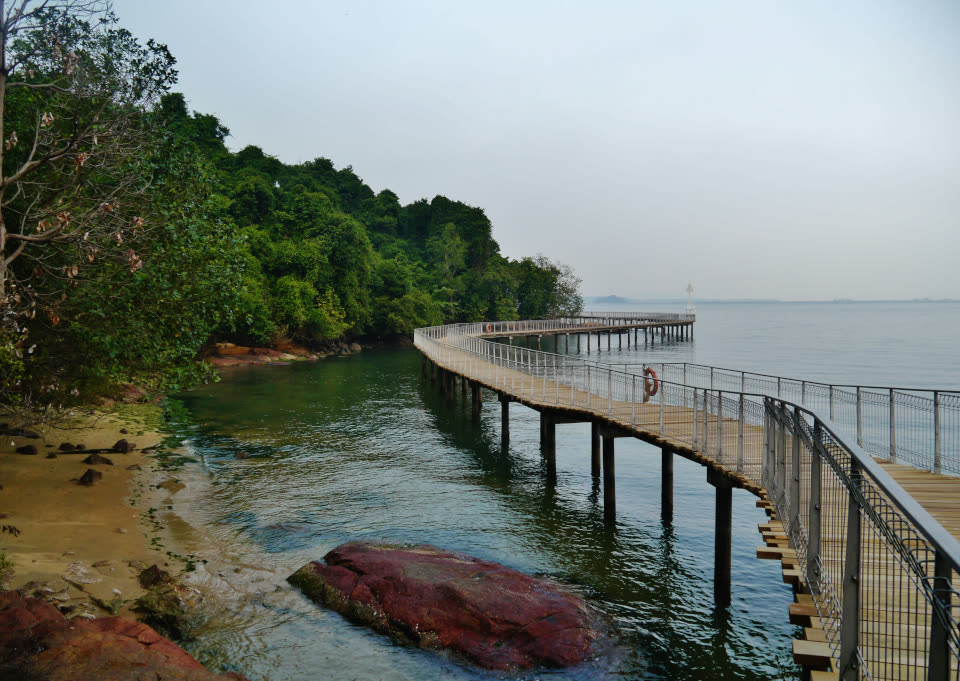
Pulau Ubin Singapore Travel Plan – Escape the City and Rebuild Your Route
Quick Summary Table
| Category | Key Insight |
|---|---|
| Location | Pulau Ubin, northeast offshore Singapore |
| Identity | Last traditional “kampong” village environment |
| Population | ~200 residents |
| Landscape | Granite quarries, mangroves, coconut & rubber plantations |
| Core activities | Cycling, walking trails, camping, wildlife observation |
| Key site | Chek Jawa Wetlands |
| Accommodation | Basic resort + camping |
| Access | Boat from mainland Singapore |
| Travel style | Slow travel, nature immersion |
| Infrastructure | Minimal but improving |
Opening Perspective: Singapore Without the Glass and Steel
Singapore is often framed through its skyline—controlled, engineered, efficient. But if you remove that layer and travel northeast, something quieter appears.
Pulau Ubin doesn’t compete with the city. It operates on a different logic.
Wooden houses replace high-rises. Dirt paths replace polished sidewalks. Roosters replace alarm clocks.
One travel observer once remarked:
“If you want to understand a country, don’t start with what it builds now—start with what it hasn’t replaced.”
Pulau Ubin is exactly that—what hasn’t been replaced.
Location and Identity: The Last Kampong System
Pulau Ubin sits off Singapore’s northeast coast, geographically close—but psychologically distant—from the mainland.
The term kampong refers to traditional Malay village life. On this island:
- Houses are wooden and aging
- Daily routines are slow and communal
- Social interaction happens in open spaces, not behind doors
The contrast is structural:
- Mainland Singapore = high-density, high-efficiency
- Pulau Ubin = low-density, low-intervention
This isn’t nostalgia—it’s preservation.
Landscape Architecture: Granite, Forest, and Water Systems
The name “Pulau Ubin” translates to “Granite Island.” That’s not symbolic—it’s literal.
The island’s terrain includes:
- Abandoned granite quarries (now water-filled basins)
- Mangrove ecosystems
- Coconut and rubber plantations
- Coastal fishing structures known as kelong
This creates a layered ecological system rather than a single landscape type.
At the eastern edge lies Chek Jawa Wetlands—arguably the island’s most complex natural zone.
Here you’ll find:
- Horseshoe crabs
- Echinoderms (marine animals related to starfish)
- Seagrass beds
- Coral fragments
- Intertidal biodiversity zones
This is not curated nature. It’s functioning ecology.
Movement Strategy: Walk or Cycle, Nothing in Between
You don’t “tour” Pulau Ubin—you navigate it.
The primary movement systems:
- Walking trails
- Bicycle routes (widely preferred)
Bike rental is available near the village entry point. Infrastructure has been upgraded:
- Rest stops
- Basic sanitation points
- Marked trails
Cycling is not just convenience—it’s efficiency.
A practical insight from experienced travelers:
“On Pulau Ubin, distance isn’t measured in kilometers—it’s measured in how much daylight you have left.”
Because:
- Trails branch unpredictably
- Heat and humidity affect pace
- Wildlife observation slows movement
Activity Design: Low Intensity, High Engagement
Pulau Ubin doesn’t offer “attractions” in the conventional sense. It offers frameworks for engagement.
You can:
- Cycle through forest trails
- Camp overnight in designated areas
- Observe wildlife (birds, small mammals)
- Fish along coastal zones
- Fly kites in open clearings
- Climb small hills for elevated views
This is participatory travel—not passive sightseeing.
Accommodation Logic: Minimal but Intentional
There is no large-scale hospitality infrastructure.
Options include:
- Basic resort stays such as Celestial Resort (southwest area)
- Camping zones
- Simple local lodging
Expectations:
- Functional comfort
- Limited luxury
- Strong proximity to nature
The advantage:
- Immediate immersion
- No commute between “hotel” and “experience”
Social Layer: A Living Community, Not a Museum
Around 200 residents still live on the island.
Their occupations include:
- Agriculture
- Fishing
- Small-scale tourism services
Morning rhythms are consistent:
- Roosters signal the start of the day
- Coffee stalls become informal discussion hubs
You’re not observing culture—you’re temporarily entering it.
Things the Media Doesn’t Tell You
This is where expectations need recalibration.
1. It’s Not a Polished Experience
Pulau Ubin is intentionally underdeveloped. That means:
- Uneven paths
- Limited signage in some areas
- No “perfect” viewpoints
2. Weather Dictates Everything
Humidity, heat, and sudden rain shape your movement more than your plan does.
3. Wildlife Is Subtle, Not Guaranteed
You won’t always see animals on demand. Observation requires patience.
4. Infrastructure Is Functional, Not Seamless
Facilities exist—but they’re basic.
5. Time Feels Slower—Because It Is
This affects:
- Travel pacing
- Activity expectations
- Energy management
6. It’s Easy to Underestimate the Distance
Cycling routes can feel longer due to terrain and climate.
7. It’s Not for Everyone
If you’re expecting:
- Air-conditioned comfort
- Structured itineraries
- High-end dining
You’ll misread the experience.
A seasoned voice once put it this way:
“Pulau Ubin doesn’t try to impress you—it waits to see if you’re willing to slow down.”
How to Gather Real-World Data Before Visiting
To refine your plan without being there:
- Check Google Maps reviews for bike rental feedback and trail conditions
- Search Facebook groups for recent visitor logistics (especially Southeast Asian travelers)
- Watch recent YouTube vlogs (filter within last 12 months)
- Scan TikTok for real-time crowd density and weather conditions
If this data isn’t validated, your expectations will rely on outdated impressions.
Operational Tips
- Start early to maximize daylight usage
- Carry water and sun protection
- Use offline maps for navigation
- Choose cycling unless physically constrained
- Allocate buffer time—movement is slower than expected
Jiuzhaigou Travel System Explained – From Entry Gate to Exit Strategy.
Pulau Ubin travel, kampong Singapore guide, Pulau Ubin cycling, Chek Jawa wetlands, Singapore nature island, Pulau Ubin itinerary, Pulau Ubin camping, Pulau Ubin bike rental, Pulau Ubin wildlife, Singapore hidden island, Pulau Ubin route, Pulau Ubin planning, Pulau Ubin experience, Pulau Ubin trails, Singapore rural travel
