
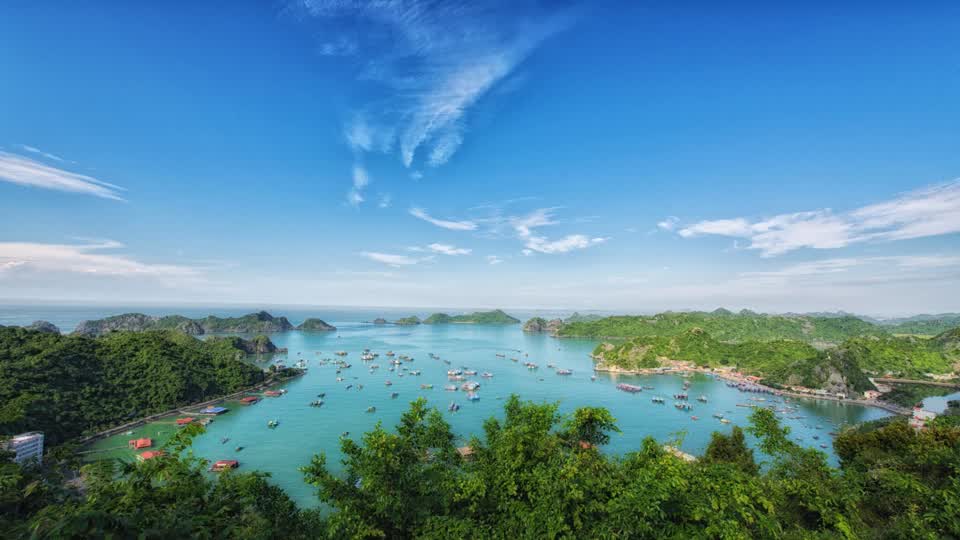
Riding Across Cat Ba Island . Curves . Jungle Roads . Salt Air
Most travelers arrive in Cat Ba looking for beaches or a cheaper alternative to Ha Long Bay cruises. What many do not expect is how physical the island feels. The journey itself becomes part of the destination. Ferries move slowly between limestone towers. Roads swing around cliffs and forests. Local fishermen repair nets beside floating homes while backpackers in dusty jackets stop for iced coffee under roadside trees. This is not only a beach escape. It is one of Northern Vietnam’s most immersive motorbike routes, where sea, jungle, weather, and infrastructure collide in ways travel brochures rarely explain.
Riding Into Cat Ba . Where The Road Matters More Than The Destination
Northern Vietnam has never been short on dramatic landscapes. Yet Cat Ba manages to feel different from the polished fantasy often attached to Ha Long Bay tourism. The island sits south of Ha Long Bay, connected by ferry routes and mountain roads that transform even a simple transfer into a moving travel experience.
Most foreign visitors approach Cat Ba from Hanoi through Hai Phong. Technically, it is shorter. In reality, it often means multiple ferry transfers, logistical confusion, and long waiting lines during weekends or public holidays. Younger Vietnamese travelers increasingly prefer the route through Tuan Chau Island instead. Not because it is famous, but because the rhythm feels smoother.
The ferry from Tuan Chau toward Gia Luan Ferry Terminal cuts travel stress dramatically. Forty-five minutes on open water sounds insignificant until you compare it with chaotic port changes elsewhere. The sea opens wider here. Limestone formations rise suddenly through mist. Even travelers who normally chase destinations rather than scenery often become strangely quiet on deck.
One traveler in a Vietnamese motorbike group wrote:
“The ferry ride was the first moment we stopped checking our phones.”
That sentence captures Cat Ba surprisingly well.
The island slows people down without announcing itself as a wellness destination.
The Coastal Road Everyone Talks About After Returning Home
The real shift happens after arriving at Gia Luan.
The road from the ferry terminal into Cat Ba Town stretches roughly thirty kilometers, but distance means very little here. Riders rarely move fast. The landscape keeps interrupting them.
One moment the road hugs the sea with fresh asphalt and salt wind rolling across the handlebars. Minutes later, it disappears into dense green forest where humidity thickens the air and insects slam against helmet visors. Sharp curves appear without warning. Steep inclines push weaker automatic scooters harder than expected.
This is where inexperienced travelers misunderstand Cat Ba.
Photos online usually show sunny beaches and turquoise water. They rarely mention that the island’s roads can become slick and dangerous after rain, especially around blind mountain corners. Local riders know this instinctively. Visitors often do not.
“Things the media doesn’t tell you” begins exactly there.
The island is beautiful, yes. But it demands attention.
Fog occasionally drops visibility to almost nothing during humid mornings. Fuel stations become sparse outside the center. Mobile signal weakens near forest sections. During peak summer weekends, trucks delivering hotel supplies compete with tourists on narrow roads designed long before tourism exploded.
None of these details ruin the experience. They make it real.
And strangely, they make the island more memorable.
Things The Media Doesn’t Tell You
Travel videos usually focus on drone shots over Lan Ha Bay or bikini photos from Cat Co Beach. Very few discuss how the island actually functions day to day.
Cat Ba is still balancing tourism growth with local life. Fishermen wake before sunrise while bars close after midnight. Construction noise appears beside jungle silence. Luxury vans pass old women carrying baskets of squid across roadside markets.
The contrast is part of the island’s identity.
If you want “real data” before traveling here, skip official tourism brochures for one evening.
Read recent one-star Google reviews.
Browse Vietnamese Facebook backpacker groups.
Watch current TikTok ferry videos during storm season.
Search YouTube for “Cat Ba traffic weekend.”
Those sources reveal practical realities travelers actually encounter:
- Ferry delays during bad weather
- Crowded beaches on Vietnamese holidays
- Occasional trash buildup after storms
- Overdevelopment concerns near the waterfront
- Noise from karaoke boats at night
Oddly enough, these complaints often help travelers prepare better rather than cancel trips.
The smartest travelers are rarely the most optimistic ones. They are the most informed.
Cannon Fort . The Best View Comes With Context
Above Cat Ba Town sits Cannon Fort, known locally as Pháo Đài Thần Công.
Most visitors come for panoramic photographs. The real value lies deeper.
The fort still carries remnants of military infrastructure from earlier conflicts. Underground tunnels remain cool even during brutal summer heat. Rusting artillery points silently toward the sea. From the observation deck, the geography suddenly makes sense. Limestone islands scatter across the horizon like defensive walls built by geology itself.
You understand immediately why this region mattered strategically for centuries.
Late afternoon is the best time to visit. Not because of Instagram lighting, although photographers certainly arrive for that. It is because the island changes personality at sunset. Fishing boats begin returning. Humidity softens. The sea loses its harsh midday brightness and turns metallic blue.
The view feels less cinematic and more lived-in.
Cat Co Beaches . Small But Surprisingly Human
The three connected beaches — Cat Co 1 Beach, Cat Co 2 Beach, and Cat Co 3 Beach — are not enormous tropical strips like those in Thailand or the Philippines.
And that limitation works in their favor.
They feel compressed between mountain and sea, almost improvised by geography. Wooden walkways connect rocky sections. Small groups gather on concrete edges drinking canned beer while teenagers jump into waves fully clothed.
European travelers expecting resort perfection sometimes leave confused.
Backpackers often stay longer than planned.
The water changes color hourly depending on cloud movement. During calm evenings, the beaches feel communal rather than commercial. Families picnic beside tattooed motorbike riders. Children rent glowing toys after dark. Vendors shout casually without aggressive sales pressure.
There is tourism here, absolutely. But daily Vietnamese social life still dominates the atmosphere.
That distinction matters.
Into The Jungle . Cat Ba National Park
For travelers who become restless after beaches, Cat Ba National Park changes the pace entirely.
The national park is humid, dense, and physically demanding during hotter months. Trails climb sharply through jungle terrain that feels far removed from the coast only kilometers away.
Media coverage usually highlights biodiversity statistics. Those are important, but they miss the sensory reality.
Sweat arrives instantly. Cicadas become deafening. Roots twist across trails like traps. Then suddenly the forest opens toward limestone viewpoints stretching endlessly across the island.
The terrain explains why Cat Ba never became fully urbanized.
Nature here still pushes back.
Travelers exploring Trung Trang Cave often expect a quick tourist stop. Instead, many leave talking about the temperature shift inside the cave system and the eerie silence away from the entrance lights.
It feels less curated than many cave attractions elsewhere in Southeast Asia.
Kayaking Lan Ha Bay . The Experience Cruise Passengers Miss
Large cruise itineraries frequently market Ha Long Bay while quietly overlooking Lan Ha Bay nearby. That is unfortunate.
Lan Ha Bay feels narrower, more intimate, less industrialized. Kayaking here changes scale completely. Limestone cliffs stop looking like distant scenery and start towering directly overhead.
Paddling through floating fishing villages reveals another side of Northern Vietnam tourism — one still adapting uneasily to rapid visitor growth.
Some travelers romanticize these villages too heavily. Others dismiss them as tourist props. Reality sits somewhere in between. Real families still live and work there, though tourism increasingly shapes local economics.
That complexity matters more than polished storytelling.
For adventurous travelers, snorkeling near Monkey Island occasionally reveals patches of coral and marine life, though environmental pressure has affected visibility in recent years.
Again, real conditions matter more than brochure promises.
Why Cat Ba Stays With People
Many destinations impress travelers briefly. Cat Ba tends to linger afterward.
Perhaps because the island refuses to become only one thing.
It is not fully wild.
Not fully commercial.
Not untouched.
Not completely discovered either.
Motorbike riders remember the road curves. Photographers remember the changing fog. Budget travelers remember late-night seafood meals beside the harbor. Experienced travelers remember the contradictions.
And those contradictions are exactly what make the island feel alive rather than manufactured.
Cat Ba National Park And Lan Ha Bay . Vietnam Beyond The Postcards.
Cat Ba motorbike, Cat Ba island, Lan Ha Bay, Cat Ba beaches, Vietnam road trip, Cat Ba ferry, Cat Ba backpacking, Northern Vietnam travel, Cat Ba National Park, Cat Co Beach, Vietnam motorbike route, Hai Phong to Cat Ba, Cat Ba travel guide, Lan Ha kayaking, Vietnam island trip
