
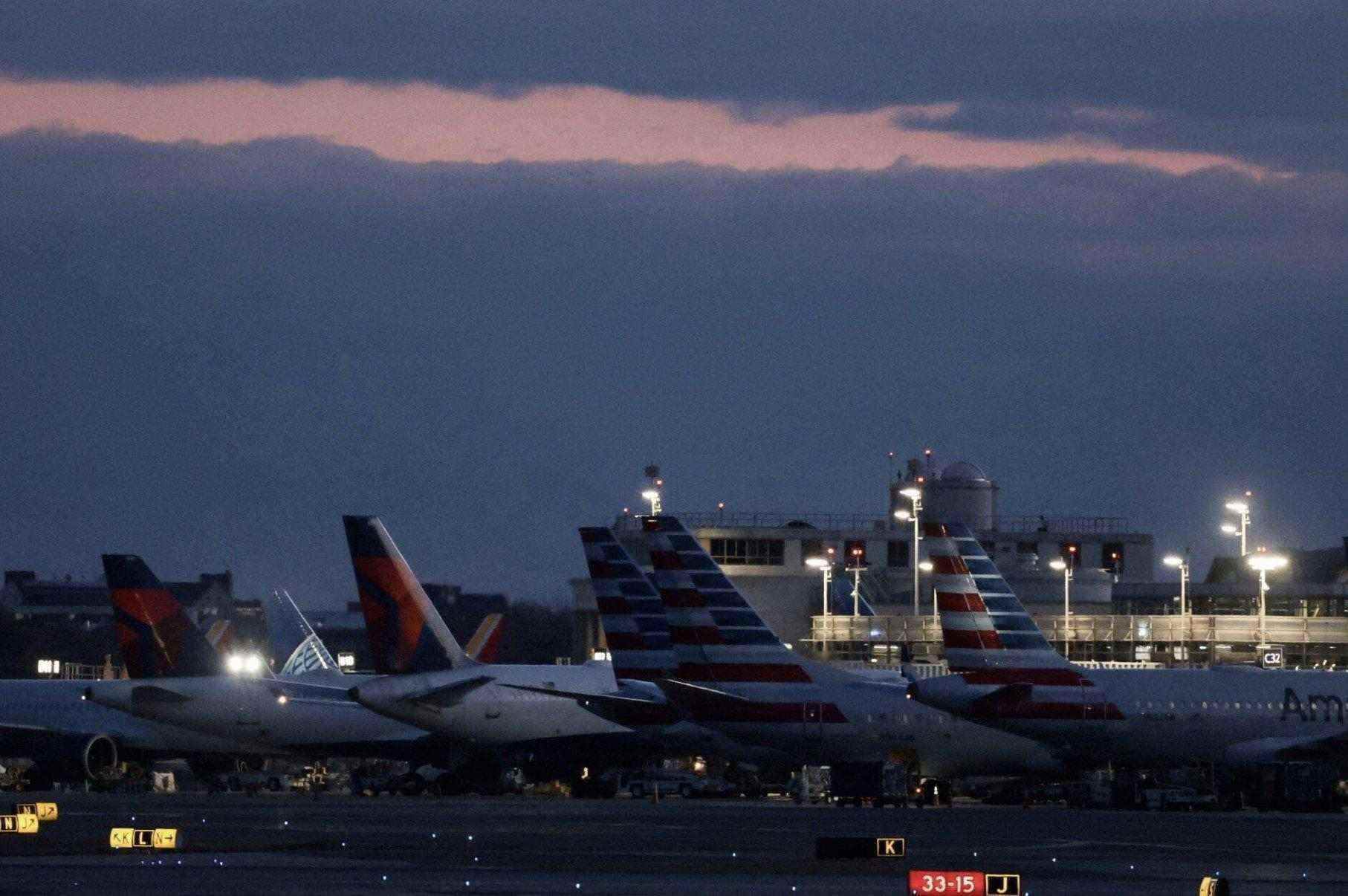
A Faulty Router Grounded America. More Than 11,200 Flights Were Canceled
More Than 11,200 Canceled Flights Reveal the Hidden Cost of America's Aging Air Traffic Systems
More Than 11,200 Canceled Flights Reveal the Hidden Cost of America's Aging Air Traffic Systems
A nationwide aviation shutdown in the United States was triggered by something that sounds almost too ordinary to believe: a routine network equipment upgrade.
There was no confirmed cyberattack, no AI malfunction and no dramatic hardware explosion. Instead, work to replace copper wiring with fiber optic cable at a remote FAA facility caused a router to overload a critical communication system.
The consequences were anything but ordinary. More than 8,200 flights were canceled on Friday evening, followed by at least another 3,000 cancellations on Saturday.
This incident exposes a fundamental problem facing modern infrastructure. The technology that keeps an economy moving can be incredibly sophisticated, yet its weakest point may still be a poorly managed equipment installation.
A Routine Fiber Upgrade Triggered a Nationwide Flight Stop
Transportation Secretary Sean Duffy said the disruption followed maintenance work performed by L3Harris, a longtime contractor for the Federal Aviation Administration.
The project involved upgrading copper wire to fiber optic cable at a remote location.
Following the installation, a router overloaded a critical communication network, creating instability serious enough to force a nationwide ground stop.
Officials are investigating whether the failure resulted from human error, incorrect installation or defective equipment.
The FAA has not yet established the final root cause.
That distinction matters. The incident is evidence of a serious infrastructure failure, but it is not yet proof that a particular contractor or employee was responsible.
One Router Created a Problem Far Beyond Its Location
The FAA's acting chief technology officer, Rebecca Guy, explained that network monitoring identified two locations generating unusually high traffic.
The systems were producing approximately 1,000 connections every four to five seconds.
The agency disabled both sources of excessive traffic and managed to stabilize the network.
The important point is that the equipment failure occurred at a remote location, but the consequences spread across the national aviation system.
Modern infrastructure operates through interconnected systems. A local technical problem can become a national operational problem when communication networks are shared across critical services.
This is not unique to aviation. Banks, hospitals, energy providers and telecommunications companies face similar risks.
More Than 11,200 Cancellations Show the Economic Cost
The scale of the disruption demonstrates how expensive infrastructure failures can become.
According to aviation data firm Cirium, more than 8,200 flights were canceled on Friday evening.
At least another 3,000 were canceled on Saturday, even after the ground stop had been lifted.
<escape>| Disruption metric | Reported figure |
|---|---:|
| Friday flight cancellations | More than 8,200 |
| Saturday flight cancellations | At least 3,000 |
| Combined cancellations | More than 11,200 |
| Unusual network activity | Around 1,000 connections every 4–5 seconds |
| Nationwide ground stop | Third of the 21st century |
The combined cancellation figure exceeds 11,200, although it does not capture the full operational impact.
Aircraft and crews can end up in the wrong locations. Passengers miss connecting flights. Airlines must reorganize schedules, and airports face congestion long after the original technical problem disappears.
A short infrastructure failure can therefore create days of disruption.
Friday Afternoon Maintenance Raises Operational Questions
Another issue concerns when the upgrade was performed.
The work reportedly took place around 3 p.m. on Friday.
Duffy explained that major airport infrastructure switchovers generally happen late at night, while remote locations sometimes undergo changes during the day.
However, he acknowledged that the agency would reevaluate its maintenance procedures.
This raises an important operational question.
If an infrastructure component supports a critical national network, should its replacement take place during normal operating hours?
There may be technical reasons for scheduling remote upgrades during the day. But those reasons must be balanced against the potential consequences of failure.
Maintenance scheduling is not merely an engineering decision. It is a risk-management decision.
The FAA's Infrastructure Problem Goes Beyond One Router
Duffy has repeatedly argued that Congress needs to provide more funding to modernize aviation equipment.
His argument highlights a broader challenge.
Critical infrastructure often operates on technology that has accumulated over decades. Replacing individual components does not necessarily modernize the entire system.
In fact, modernization can introduce new risks when old and new technologies must work together.
The FAA's copper-to-fiber upgrade illustrates this problem.
Fiber offers advantages in network capacity and data transmission, but installing it does not automatically guarantee reliability.
Routers, configurations, network monitoring, backup systems and testing procedures must all work correctly.
A faster connection is not necessarily a safer network.
AI Was Not the Confirmed Cause of the Aviation Crisis
The incident also occurred just one day after the FAA announced the rollout of an AI tool for air traffic controllers.
The timing attracted attention, especially because the air traffic controllers' union said it had not been consulted during the system's design.
However, FAA Administrator Bryan Bedford explicitly rejected the suggestion that AI caused the shutdown.
He said investigators had found zero evidence of anything related to AI or malicious activity and described the incident as an equipment problem.
Homeland Security Secretary Markwayne Mullin also made a joking reference to calling the technology SI rather than AI.
The distinction is important.
The presence of an AI project does not establish that AI caused an unrelated network failure.
At the same time, the union's concerns about consultation deserve attention. Introducing new technology into safety-critical environments requires cooperation with the professionals who use it.
The FAA's Contractor Model Creates Accountability Challenges
L3Harris has a long-standing relationship with the FAA.
Using specialized contractors is common in government technology projects. Private companies can provide engineering expertise, equipment and installation capabilities that public agencies may not maintain internally.
But outsourcing technical work does not outsource accountability.
The government must still establish clear performance requirements, testing procedures, acceptance standards and responsibility when something fails.
The investigation should determine whether the router was defective, whether installation procedures were followed and whether adequate testing occurred before the equipment entered operational service.
It should also examine why the network was vulnerable to excessive traffic from two locations.
The biggest governance question is whether the FAA had sufficient safeguards to prevent a local equipment problem from becoming a nationwide emergency.
Network Modernization Is Becoming a National Security Priority
Aviation infrastructure is more than a transportation service.
It supports tourism, international trade, business travel, logistics and national security.
When air traffic operations stop, the financial consequences spread through airlines, hotels, airports, cargo companies and businesses that depend on reliable transportation.
This creates a strong argument for treating aviation technology as strategic infrastructure rather than ordinary government IT spending.
Modernization budgets should account for more than new hardware.
They should include redundancy, cybersecurity, stress testing, independent verification and emergency recovery capabilities.
The goal should not simply be to replace old equipment.
It should be to make the entire system more resilient.
Technology Contractors Face a Higher Standard of Reliability
The incident could have consequences for how government agencies evaluate technology contractors.
Companies working on critical infrastructure should expect greater scrutiny over installation procedures, change management and system testing.
A successful installation should not be measured by whether the new equipment powers on.
It should be measured by whether the entire network continues operating safely under realistic conditions.
This is particularly important as governments introduce AI, automation and more connected systems.
Every new layer creates additional dependencies.
The more interconnected the system becomes, the more important it is to understand what happens when one component fails.
Small Businesses Can Learn From the FAA's Infrastructure Failure
For small and medium-sized businesses, the lesson is surprisingly practical.
A company does not need a nationwide aviation network to experience a similar problem.
A failed router, incorrect software update or poorly tested cloud migration can interrupt payments, customer service, inventory management and daily operations.
Businesses should adopt several basic practices.
-
Schedule major infrastructure changes during low-activity periods.
-
Maintain backups and alternative communication systems.
-
Test upgrades in a controlled environment before deployment.
-
Establish clear responsibility with external technology contractors.
-
Keep a documented recovery plan for critical systems.
AI adoption should follow the same principle.
Automating a business process is valuable only when the underlying systems remain dependable.
For smaller companies, reliability often creates more economic value than adopting the newest technology first.
The Real Failure Was a Lack of Resilience
The FAA's nationwide ground stop is a reminder that technological progress and operational reliability are not the same thing.
Replacing copper with fiber was supposed to improve infrastructure. Instead, a problem involving a router and excessive network traffic disrupted thousands of flights.
The final investigation will determine precisely what went wrong and who bears responsibility.
But the larger lesson is already visible.
America's aviation system cannot depend on infrastructure that works only when every component behaves perfectly.
The future of transportation will involve more automation, more AI and more connected technology. That future requires stronger testing, better maintenance planning and systems capable of surviving individual failures.
The most important measure of modern infrastructure is not how advanced it looks when everything works.
It is how well it performs when something goes wrong.
More Than 11,200 Canceled Flights Reveal the Hidden Cost of America's Aging Air Traffic Systems
FAA network failure, US flight cancellations, L3Harris contractor, aviation infrastructure, FAA technology upgrade, fiber optic upgrade, router failure, air traffic control, aviation technology, FAA modernization, AI air traffic control, critical infrastructure, network resilience, airline disruptions
