
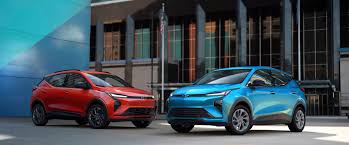
From Battery Fires to a Second Comeback, the Chevrolet Bolt Has a Remarkable Story
The electric vehicle industry has spent years convincing consumers that the future of transportation requires bigger batteries, larger screens, premium interiors, and increasingly expensive vehicles. Chevrolet is making a different argument. The 2027 Bolt costs $28,995, travels an estimated 262 miles on a charge, and offers enough space and performance for everyday life. It is also expected to disappear from production early next year.
The 2027 Chevrolet Bolt Returns at $28,995 but Its Comeback May Already Be Over
That contradiction makes the Bolt more interesting than another new electric car launch. It raises a fundamental question about the automotive industry. Are manufacturers building the electric vehicles consumers actually want, or the expensive vehicles manufacturers find more profitable to sell?
Chevrolet Brings Back Its Most Affordable Electric Car
The 2027 Chevrolet Bolt returns after a painful production interruption caused by a major battery recall that cost General Motors billions of dollars.
The original Bolt arrived in 2016 with a starting price below $40,000. A second-generation model followed in 2021, alongside the larger Bolt EUV.
Then battery fires damaged the vehicle's reputation, forcing a massive recall and eventually bringing production to a halt.
Now Chevrolet has revived the nameplate with a starting price of $28,995, including destination fees. According to the original review, it is the cheapest new electric vehicle available in the American market.
The remarkable part is that this version costs approximately $10,000 less than the original model.
A 65-kWh LFP Battery Changes the Proposition
The most important technical improvement is a completely new lithium iron phosphate battery pack.
The battery has 65 kilowatt-hours of capacity and provides an EPA-estimated driving range of 262 miles, approximately 422 kilometers.
A single front-wheel-drive electric motor produces 210 horsepower and 169 pound-feet of torque.
The vehicle also adopts the North American Charging Standard connector, giving owners access to Tesla's Supercharger network.
This matters because charging convenience is becoming an important part of the electric vehicle purchasing decision.
Chevrolet has not reinvented the Bolt. It has concentrated on improving the parts that matter most while preserving the original formula.
Practical Design Beats Unnecessary Luxury
The Bolt's interior makes its priorities obvious.
Hard plastics dominate the cabin, and premium materials are largely absent. Buyers should not expect a luxury experience.
But the vehicle offers something more useful for its intended market: space.
The rear seats provide reasonable passenger room, while folding the 60/40 split seats increases cargo capacity to 56.3 cubic feet, approximately 1,594 liters.
With the seats upright, cargo capacity remains 16.2 cubic feet.
The dashboard includes an 11.3-inch touchscreen, but Chevrolet has retained physical buttons and steering-wheel controls.
That decision deserves attention. Physical controls are often faster and easier to operate than touch-sensitive surfaces, especially while driving.
The optional Comfort Package costs $995 and adds heated front seats and a heated steering wheel.
Software Is the Bolt's Biggest Weakness
The infotainment system runs on Chevrolet's Android Automotive-based software.
Google Maps comes integrated, and the Google Play Store allows drivers to install compatible applications. Google's Gemini assistant is also included.
However, there is one significant omission.
The Bolt does not support Apple CarPlay or Android Auto.
Owners who depend on smartphone applications that are not available through the vehicle's software must rely on Bluetooth instead.
The interface can also feel sluggish.
This illustrates a growing challenge for automakers. Building a good physical product is no longer enough. Software has become part of the ownership experience, and customers increasingly expect their vehicles to work naturally with the digital services they already use.
The Numbers Make a Powerful Economic Argument
The Bolt's value becomes clearer when its specifications are compared with its price.
-
Starting price of $28,995.
-
Battery capacity of 65 kWh.
-
EPA-estimated range of 262 miles.
-
Motor output of 210 horsepower.
-
Tested efficiency of 4.0 miles per kWh.
-
Maximum cargo capacity of 56.3 cubic feet.
-
Optional Comfort Package costing $995.
During mixed driving, the vehicle achieved approximately 4 miles per kWh, suggesting a theoretical range of around 260 miles.
That is remarkably close to its official estimate.
For context, the average transaction price of a new vehicle in the United States is approaching $50,000.
The Bolt therefore offers an alternative at a substantial discount to the broader new-car market.
Chevrolet Is Selling Transportation, Not Status
The Bolt's business proposition is straightforward.
It targets consumers who want to transition to electric transportation without paying premium prices.
Rather than competing through luxury materials or extreme acceleration, Chevrolet delivers value through affordability, efficiency, practicality, and an established dealer network.
This is a different economic strategy from selling expensive electric vehicles with high-end features.
However, there is a problem. Affordable vehicles can generate less revenue per unit than premium models, while still requiring substantial investment in engineering, manufacturing, distribution, and customer support.
The Bolt's impending production end highlights the tension between consumer value and automaker profitability.
The Platform Matters as Much as the Product
Chevrolet benefits from an established automotive ecosystem.
Its dealer network, manufacturing experience, brand recognition, and service infrastructure are difficult for smaller electric vehicle startups to reproduce.
The adoption of the NACS charging connector also improves compatibility with an increasingly important charging network.
But the software experience shows the limitations of this ecosystem.
Google integration is useful, yet the absence of smartphone projection creates unnecessary friction.
Meanwhile, Super Cruise hands-free driving technology requires a $6,600 package that includes other equipment. This is considerably more expensive than the standalone option available on many other Chevrolet models, typically priced below $2,500.
A low starting price does not automatically mean every desirable feature is affordable.
Competition Is Moving Toward Affordable Electric Vehicles
The Bolt will not remain alone in the affordable EV category.
Slate Truck is preparing to enter production, while Ford's Fathom is expected to follow.
These upcoming vehicles could expand the number of choices available to consumers who cannot justify spending $50,000 or more on an electric car.
The competitive battle will increasingly revolve around manufacturing costs, battery economics, charging access, and customer experience.
The winning company may not be the one with the most impressive technology. It may be the one that delivers acceptable technology at a price ordinary households can afford.
The Risks Behind Chevrolet's Comeback
The first risk is brand trust.
The previous battery crisis demonstrated how quickly a technical failure can destroy years of brand-building.
The new battery addresses the central problem, but Chevrolet must still convince consumers that the vehicle is reliable.
The second risk is software.
Customers increasingly expect seamless connectivity, responsive interfaces, and intelligent assistance.
The third risk is product availability.
Ending production early next year could limit supply just as the Bolt becomes an attractive proposition again.
For customers, that means the used-car market may become an important destination for affordable Bolt ownership.
The Real Business Opportunity Is Making AI Generate Revenue
The Bolt's story contains a lesson that extends beyond automobiles.
A product does not need to be technologically impressive in every category to become commercially valuable. It needs to solve an important problem at a price customers accept.
That principle applies directly to artificial intelligence.
Businesses are entering an environment where American companies lead many advanced AI model developments, while Chinese companies are aggressively competing in model development, applications, hardware, and cost efficiency.
Small businesses do not need to compete with either ecosystem.
They need to use these technologies to improve their own economics.
Consider three practical opportunities.
First, automate repetitive work.
A small retailer can use AI assistants to answer customer questions, prepare product descriptions, classify orders, and support after-sales service.
A manufacturer can use AI to summarize production reports, identify recurring defects, and organize maintenance records.
Second, turn existing business data into an advantage.
Customer histories, purchasing patterns, product information, and sales records are valuable assets.
A business with organized data can build better customer recommendations, demand forecasts, and sales processes without training its own expensive AI model.
Third, sell outcomes rather than technology.
A marketing agency should not sell AI-generated content simply because it is cheaper to produce.
It should sell more qualified leads, faster campaign execution, and measurable customer acquisition improvements.
A software company should not compete by adding an AI chatbot to every screen. It should help customers reduce operating costs or increase revenue.
This is where AI becomes an actual business opportunity rather than an expensive experiment.
What Small and Medium-Sized Businesses Should Do Next
For a small or medium-sized business, I would begin with one process that consumes significant employee time.
Measure how much it currently costs. Introduce an AI tool. Run a controlled 30-day experiment.
Track four outcomes:
-
Hours of labor saved.
-
Operating costs reduced.
-
Revenue generated or protected.
-
Customer satisfaction improved.
Choose tools based on performance, language support, security, integration, and total cost rather than their country of origin.
American AI platforms may be suitable for complex reasoning and business applications. Chinese solutions may offer competitive alternatives for certain cost-sensitive workloads. Vietnamese providers may offer advantages in local language support and implementation.
Do not depend entirely on one provider. Keep ownership of customer information, business records, and essential operating processes.
Most importantly, do not invest heavily before proving that the technology produces measurable value.
The Bolt demonstrates the same principle. A well-priced product with useful capabilities can be more attractive than a technically impressive product that customers cannot afford.
The Future Belongs to Businesses That Understand Value
The 2027 Chevrolet Bolt receives an 8/10 rating. It is not perfect. Its software has limitations, its lane-keeping assistance is disappointing, and its interior lacks luxury.
But at $28,995, it delivers a compelling combination of range, space, efficiency, and everyday usability.
Its expected production ending is unfortunate, particularly because the vehicle appears to be finding its stride.
Still, the broader affordable EV market is moving forward.
The larger lesson is equally important for businesses entering the AI era.
Technology alone does not create a sustainable competitive advantage. Distribution, customer understanding, operating efficiency, trust, and pricing determine whether innovation becomes a successful business.
The next generation of winners will not necessarily build the most advanced products. They will make powerful technology useful, affordable, and valuable enough that ordinary customers are willing to pay for it.
From Battery Fires to a Second Comeback, the Chevrolet Bolt Has a Remarkable Story
Chevrolet Bolt 2027, affordable electric cars, cheapest electric vehicle, Chevrolet EV, LFP battery technology, electric vehicle market, Tesla Supercharger, affordable EV market, AI business strategy, AI for small business, AI automation tools, business digital transformation, AI revenue growth, small business technology
