
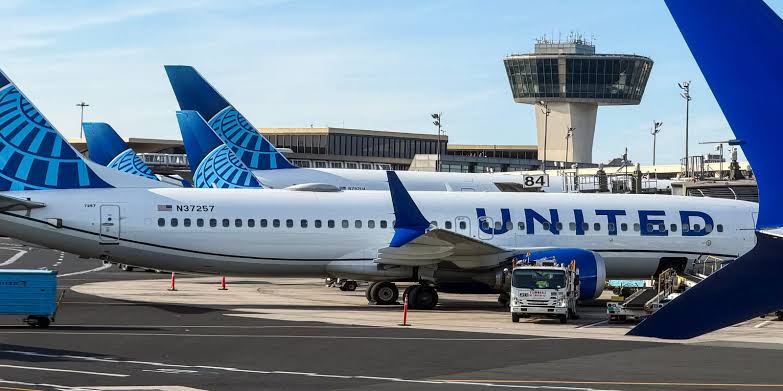
United Airlines Blocks AI Agents From Booking Flights. The Battle for Travel Customers Has Begun
The AI industry wants to change how people buy things. Instead of opening websites, comparing prices, entering payment details and completing transactions, customers could simply tell an AI agent what they want and let software handle everything.
AI Agents Could Become the Next Travel Middlemen. United Airlines Is Not Convinced
It sounds like the next major step in digital commerce.
But United Airlines is pushing back.
The airline has announced changes to its ticketing policies designed to prevent AI agents from booking flights through its website, third-party travel agencies and flight aggregators. Its concerns go beyond technical problems. They involve customer security, regulatory responsibilities and something potentially more valuable than the booking itself: control of the customer relationship.
United's decision exposes a growing conflict between AI companies that want to become the next commercial middlemen and established businesses that have spent decades building direct relationships with customers.
United Airlines Draws a Line Against Autonomous Bookings
United believes allowing AI agents to complete flight bookings introduces security and operational risks.
An AI agent may need access to customer accounts, passwords, payment information and MileagePlus miles to complete a transaction.
That creates several possible problems, including unauthorized purchases, unexpected account changes and misuse of loyalty points.
The airline also argues that autonomous bookings could conflict with existing Department of Transportation and Federal Aviation Administration requirements.
One example involves flight check-in. United says a human passenger must personally acknowledge that their baggage does not contain explosives.
This is not simply a question of whether AI can operate a website. It is a question of who is legally responsible when something goes wrong.
AI Agents Want to Become the New Travel Middlemen
Traditional online travel works through several steps.
Customers search for flights, compare prices, select seats, provide passenger information and pay.
AI agents aim to compress that entire process into a conversation.
A customer could request a flight with specific dates, prices, baggage requirements and departure times. The agent would search available options, make comparisons and potentially complete the purchase.
For consumers, this could save time.
For airlines, however, it introduces another company between the airline and its customer.
United CEO Scott Kirby has expressed resistance to this model, saying he does not want to create another middleman.
That statement reveals the commercial issue behind the policy.
United Is Protecting More Than Payment Information
Airlines have several reasons to maintain direct control over bookings.
The first is security. Customers may expose sensitive information when giving agents access to their accounts.
The second is responsibility. Airlines must ensure that passengers complete required safety and identification procedures.
The third is customer ownership.
When customers book directly, United controls the experience, communicates with passengers and maintains access to valuable customer information.
An AI platform sitting between the airline and passenger could gradually weaken that relationship.
The airline risks becoming the supplier behind an AI-controlled shopping experience.
That is a familiar problem in digital markets. When another platform controls customer discovery, it can eventually gain influence over pricing, distribution and purchasing decisions.
JPMorgan and Amazon Are Also Restricting AI Agents
United is not alone.
JPMorgan Chase and Amazon are among the businesses restricting AI agents from interacting with their products.
The underlying concern is similar.
Financial institutions handle sensitive financial information. Retail platforms manage payments, purchases, personal accounts and delivery details.
Allowing autonomous software to operate these systems introduces risks that traditional website access controls were not necessarily designed to handle.
An agent might misunderstand instructions, purchase the wrong product or expose information.
The issue becomes more complicated when responsibility is shared between the AI provider, the customer and the business processing the transaction.
Southwest Is Taking the Opposite Approach
Not every airline sees AI distribution as a threat.
Southwest has created a plugin that allows users to book flights through ChatGPT.
This represents a different strategic decision.
Instead of preventing AI from entering the booking process, Southwest is experimenting with a new distribution channel.
The potential advantage is access to customers who increasingly prefer conversational interfaces over traditional search forms.
However, there is a trade-off.
The airline must determine how much control it is willing to give an external platform in exchange for additional customer access.
United and Southwest are effectively testing two different distribution strategies.
One prioritizes direct customer relationships. The other explores AI-powered distribution.
Neither approach has yet established a definitive long-term winner.
Uber's Numbers Reveal the Reality of Agentic Commerce
The strongest evidence that AI-powered commerce remains in its early stages comes from Uber.
During its third-quarter earnings call, Uber reported handling 320 million trips and deliveries during the week of Halloween.
Of those transactions, AI agents generated just 500 Uber Eats orders and four rides.
Uber's reported activity during Halloween week
320M
Total trips and deliveries
500
AI-agent food orders
4
AI-agent rides
0.00016%
Food orders as a share of total activity
These numbers challenge the idea that autonomous shopping is already transforming consumer behavior.
People may download AI applications, experiment with assistants and use them to research products. But allowing software to spend money or control important accounts is a different decision.
Interest in AI does not automatically translate into commercial adoption.
Agentic Commerce Has a Trust Problem
There is an important difference between asking AI to summarize the news and allowing it to purchase an airline ticket.
The first involves information.
The second involves money, personal data and potentially irreversible decisions.
Giving an agent access to a payment card is also different from providing access to an email account or airline loyalty program.
Each additional permission increases the potential consequences of an error.
The incident involving Meta's Muse, which reportedly exposed a user's address online, illustrates why businesses are cautious about autonomous software.
For agentic commerce to become mainstream, customers need confidence that agents will follow instructions, protect personal information and handle mistakes appropriately.
Convenience alone is not enough.
AI Companies Face a Distribution Problem
The business model behind AI agents is attractive.
An AI platform could become the place where consumers discover products, compare services and make purchasing decisions.
Instead of visiting multiple websites, customers would interact with one assistant.
That creates an opportunity for AI companies to control customer attention and potentially earn revenue through transaction fees, partnerships or commercial services.
But United's decision exposes a structural weakness.
AI platforms do not necessarily own the products, inventory, transportation or payment infrastructure required to complete transactions.
They depend on businesses that may refuse access.
The more important AI becomes in customer discovery, the more pressure traditional companies will face to decide whether they should cooperate or defend their distribution channels.
Airlines Risk Losing Their Direct Customer Relationships
For United, a flight ticket is only the beginning of the customer relationship.
Airlines also generate value through loyalty programs, upgrades, baggage services, seat selection and additional purchases.
If AI agents control the booking process, they could eventually influence which airline customers choose and which additional services they purchase.
That creates a potential shift in bargaining power.
The airline still operates the aircraft, but another platform may control the customer interaction.
This is similar to the relationship between hotels and online travel agencies.
Distribution creates value, but depending too heavily on an intermediary can reduce a company's control over its customers.
Regulatory Responsibility Could Slow AI Adoption
Airline bookings are more complicated than ordinary online shopping.
Passenger identification, baggage declarations and safety requirements create obligations that cannot simply disappear because an AI agent is involved.
If an agent makes an incorrect declaration, businesses need clear answers about responsibility.
Who approved the transaction?
Who verified the passenger information?
Who is responsible for unauthorized changes?
Until these questions have reliable answers, airlines have strong reasons to limit autonomous access.
Regulation may not prevent agentic commerce permanently, but it could determine how quickly it develops.
Small Businesses Should Prepare Without Giving AI Full Control
For small and medium-sized businesses, United's decision offers a practical lesson.
AI agents can create new sales opportunities, but giving autonomous software unrestricted access to business systems is unnecessary.
A better approach is gradual adoption.
-
Start with discovery. Allow AI to help customers find products, compare services and understand pricing.
-
Keep payment controls. Require human confirmation before significant purchases or financial transactions.
-
Limit permissions. Give agents access only to the information and systems they actually need.
-
Protect customer data. Avoid sharing passwords, sensitive records or unnecessary personal information.
-
Measure commercial results. Track completed purchases, conversion rates, support costs and customer satisfaction.
Businesses should also prepare their product information, prices and policies for AI-powered discovery.
The goal is to become accessible to AI without surrendering control of the entire customer relationship.
The Next Battle Is Over Who Owns the Customer
United's restrictions are not simply a rejection of artificial intelligence.
They represent resistance to a new distribution model in which AI platforms could become the primary interface between customers and businesses.
Southwest is experimenting with that future. United is protecting its existing model. JPMorgan and Amazon are also drawing boundaries around autonomous access.
Meanwhile, Uber's numbers suggest that consumer adoption remains extremely limited.
The opportunity is real, but the infrastructure of trust is not ready.
The companies that succeed in agentic commerce will need more than intelligent software. They will need secure payments, clear permissions, reliable execution and cooperation from the businesses whose products they sell.
The biggest question is not whether AI can book a flight.
It is whether airlines, retailers and financial institutions are willing to let another company control the customer relationship.
For now, United has made its position clear. AI can help customers make decisions, but it does not automatically get permission to make those decisions for them.
AI Agents Could Become the Next Travel Middlemen. United Airlines Is Not Convinced
United Airlines AI, AI flight booking, agentic commerce, AI travel agents, airline booking technology, AI security risks, autonomous AI agents, United Airlines policy, Southwest ChatGPT, AI customer experience, AI payment security, digital commerce, AI business strategy, airline distribution
