
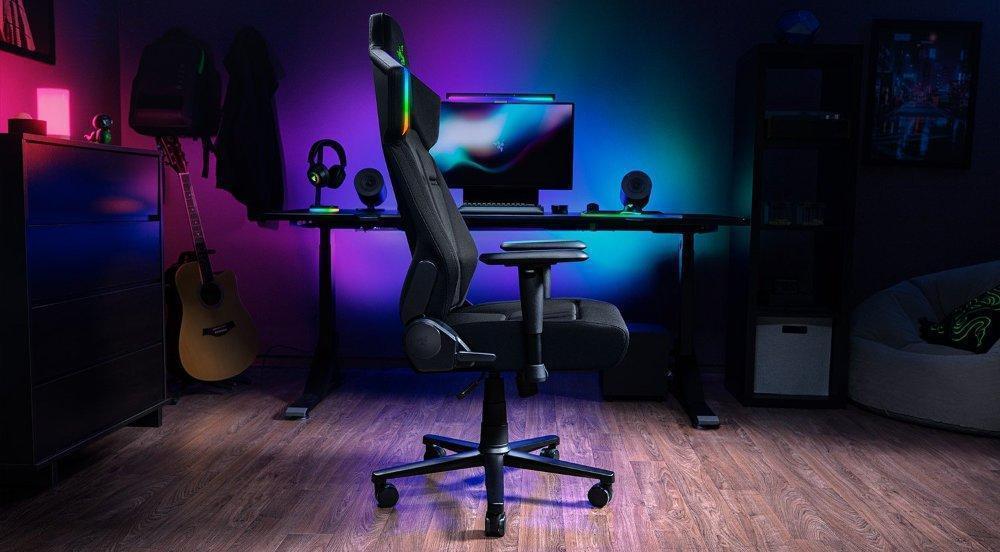
Razer Soma Pro Turns a $1,000 Gaming Chair Into a Full-Body Immersion System
Gaming hardware companies have spent years competing over faster displays, more powerful graphics cards and increasingly sophisticated controllers. But Razer is pursuing something different. It wants players to feel the game physically, not just see and hear it.
Razer Soma Pro Shows How Far Gaming Accessories Can Go to Capture Premium Buyers
The company's new Soma gaming chair lineup combines vibration technology, integrated audio and customizable lighting. At the top sits the $1,000 Razer Soma Pro, a chair designed to turn explosions, gunfire and racing engines into physical sensations.
It sounds excessive. That is precisely the point. Razer is betting that dedicated gamers will pay a premium for experiences that traditional gaming equipment cannot provide.
Razer Introduces Three Gaming Chairs With Different Immersion Levels
Razer's Soma lineup contains three models, each targeting a different spending level.
The Soma Chroma costs $500 and focuses on ergonomic seating with RGB lighting around the headrest.
The Soma Sensa HD Haptics costs $570. It removes the RGB lighting but adds six vibration actuators positioned around the lumbar and seating area.
The flagship Soma Pro costs $1,000 and combines both technologies with integrated speakers positioned behind the user's ears.
The pricing creates a clear product ladder. Customers can purchase basic visual customization, prioritize physical feedback or pay for the complete experience.
Six Actuators Turn Gaming Actions Into Physical Feedback
The most interesting technology inside the Soma lineup is Razer's Sensa HD Haptics system.
Instead of relying exclusively on conventional audio and visual effects, the chair translates game activity into vibrations.
A powerful explosion can produce a corresponding physical sensation. Racing games can generate continuous rumbling that makes acceleration and road conditions feel more immediate.
Razer says more than 100 games support its Sensa HD Haptics technology.
These supported titles include specific effects connected to in-game actions. For example, casting a spell in Final Fantasy XVI or firing weapons in 007 First Light can trigger corresponding physical feedback.
This is more sophisticated than simply placing a vibrating motor inside a chair.
The objective is to connect physical sensations with events happening inside the game.
Soma Pro Combines Freyja and Clio Into One Product
Razer previously explored similar experiences through separate accessories.
The Freyja provided haptic feedback through a gaming cushion, while the Clio introduced speakers through a headrest attachment.
The Soma Pro brings these ideas together.
The result is a more integrated product that combines seating, vibration and audio in one system.
This matters because multiple accessories can create unnecessary complexity. Users must connect different devices, manage separate settings and ensure that their software works together.
Razer wants to reduce that friction through a unified hardware experience.
It also creates a stronger reason for customers to remain inside the company's ecosystem.
More Than 100 Supported Games Create the Software Opportunity
Gaming hardware becomes significantly more valuable when software developers support its special features.
Razer's compatibility with more than 100 titles gives Sensa HD Haptics an existing foundation.
However, compatibility does not mean every game delivers the same quality of experience.
Some titles provide dedicated vibration effects connected to specific actions. Others can generate sensations based on game audio.
Audio-driven haptics offer broader compatibility, but they can produce unusual results.
Deep character voices, for example, may translate into unexpected vibrations through the chair.
Racing games are potentially a stronger use case because continuous engine sounds and physical impacts naturally translate into seat feedback.
This highlights an important product lesson. Immersion technology needs more than technical capability. It needs thoughtful implementation.
THX Spatial Audio Expands the Soma Pro Experience
The flagship chair also includes forward-facing speakers positioned behind the user's ears.
Razer says the system supports THX Spatial Audio, creating a more immersive sound environment around the player.
Users can also connect external speakers to create a desk-based surround sound arrangement.
This is important because audio is one of the strongest components of gaming immersion.
A sound coming from the correct direction can communicate danger, distance or movement before the player even sees what is happening.
Combining this with physical feedback creates a more complete experience.
However, the quality of the integrated speakers will ultimately determine whether the system offers a meaningful advantage over dedicated gaming headsets and external audio equipment.
USB-C Power Requirements Add an Unexpected Practical Challenge
The Soma lineup also comes with a practical consideration.
The technology requires USB-C power, connected to a wall outlet or a suitable power bank.
The Soma Chroma's RGB lighting also requires an external battery pack.
Testing with a 10,000mAh battery reportedly proved insufficient, while a larger 25,000mAh power bank successfully powered the lighting.
This creates an additional purchasing and setup consideration.
A premium gaming chair should make the gaming experience easier, not introduce another collection of cables and accessories.
For customers spending $500 to $1,000, convenience should be part of the product value.
Razer Is Selling an Experience Rather Than a Traditional Chair
The commercial strategy behind Soma is more interesting than the hardware itself.
Traditional gaming chairs compete on comfort, materials, ergonomics and appearance.
Razer is adding another category of value: sensory immersion.
That allows the company to position its product outside the conventional furniture market.
The Soma Pro is not simply competing with office chairs or gaming seats. It is competing for the same discretionary spending that goes toward premium headsets, controllers, speakers and gaming accessories.
This creates an opportunity for higher prices and stronger brand differentiation.
But it also raises expectations. Customers paying $1,000 will expect the technology to work reliably and justify the premium.
Razer's Ecosystem Creates a Competitive Advantage
Razer already has an established gaming hardware ecosystem involving keyboards, mice, headsets, lighting and software.
The Soma range extends that ecosystem into physical immersion.
Its Synapse and Chroma software platforms provide a foundation for managing device experiences.
Combining multiple technologies inside one chair can reduce the friction associated with purchasing separate products.
Competitors can replicate individual features, but building a complete experience requires hardware engineering, software integration and game developer support.
That combination is harder to reproduce than adding another RGB lighting strip.
Nevertheless, Razer must continue expanding game compatibility to maintain its advantage.
The $570 Soma Sensa May Offer Better Commercial Value
The most expensive product is not necessarily the best purchase.
The Soma Sensa HD Haptics costs $570, only $70 more than the basic Chroma model.
It removes RGB lighting but adds six haptic actuators.
For gamers who prioritize physical feedback over decorative lighting, this may be the more attractive option.
The Soma Pro's $1,000 price requires customers to value its integrated speakers and combined feature set enough to justify an additional $430.
That is a substantial difference.
Razer needs to demonstrate that its flagship audio experience is meaningfully better than using a separate headset or speaker system.
Without that advantage, the Sensa could represent the stronger value proposition.
Small Gaming Businesses Can Learn From Razer's Product Strategy
The Soma launch offers a useful lesson for smaller hardware companies.
Customers do not always pay more for additional specifications. They pay more when products create experiences that feel difficult to reproduce elsewhere.
Razer builds value by combining existing technologies into a single product and offering several price levels.
Smaller businesses can apply the same principle.
Instead of competing directly against large manufacturers on production scale, they can focus on specialized audiences, carefully integrated features and clearly differentiated products.
For gaming accessory brands, software compatibility and ecosystem partnerships may become as important as the physical hardware.
The challenge is ensuring that additional features solve real customer problems rather than simply increasing manufacturing costs.
The Biggest Risk Is Whether Immersion Justifies the Price
Razer's Soma lineup faces three major challenges.
First, the technology must deliver consistent feedback across supported games.
Second, the integrated audio needs to provide enough quality to justify the Pro's premium.
Third, customers must find the experience comfortable and practical for long gaming sessions.
There is also a broader industry question about demand.
Enthusiasts may love physical feedback, but mainstream gamers may consider it unnecessary.
The available information does not include sales forecasts, production volumes, customer adoption figures or independent long-term comfort testing.
Those missing details make it difficult to determine whether Soma will become a major product category or remain a premium niche.
Gaming Hardware Is Moving Toward More Complete Experiences
Razer's Soma lineup illustrates how gaming hardware is evolving.
The competition is no longer limited to processing power, display quality or input speed.
Companies are exploring ways to make digital experiences feel more physical.
For Razer, the opportunity is to turn its existing haptic, audio and lighting technologies into a more unified platform.
The $1,000 Soma Pro is an ambitious expression of that strategy. The $570 Sensa may prove more commercially attractive, while the $500 Chroma offers a simpler entry point.
Ultimately, the success of these chairs will depend on whether players continue using their features after the novelty wears off.
Gaming immersion is valuable, but convenience, comfort and price still matter.
Razer is betting that the next premium gaming accessory will not just improve what players see on screen.
It will make them feel what happens inside it.
Razer Soma Pro Shows How Far Gaming Accessories Can Go to Capture Premium Buyers
Razer Soma Pro, Razer gaming chair, Soma HD Haptics, gaming haptic technology, immersive gaming chair, Razer Freyja, Razer Clio speakers, gaming chair price, THX Spatial Audio, gaming immersion technology, Razer Chroma lighting, premium gaming hardware, haptic gaming accessories, gaming hardware market
